THE UNITED REPUBLIC OF TANZANIA NATIONAL EXAMINATIONS COUNCIL OF
TANZANIA
CERTIFICATE OF SECONDARY EDUCATION EXAMINATION
033/1 BIOLOGY 1
(For Both School and Private Candidates)
Time: 3 Hours Year: 2023
Instructions
This paper consists of sections A, B and C with a total of
eleven (11) questions.
Answer all the questions in the sections A and B and
two (2) questions from section C.
Section A carries sixteen (16) marks, section B
fifty four (54) marks and section C carries
thirty (30) marks.
All writing should be in blue or black pen, except for diagrams that
must be drawn in pencil.
Communication devices and any unauthorised materials are not allowed in
the examination room.
Write your Examination Number on every page of your
answer booklet(s).
SECTION A (16 Marks)
Answer all questions in this section.
1. For each of the item (i) - (x). choose the correct
answer from the given alternatives and write its letter beside the item
number in the answer booklet provided.
(i) Which theory postulates that living organisms originated from
non-living organisms?
Chemical evolution
Cosmozoan
Steady slate
Special creation
Spontaneous generation
Choose Answer :
(ii) Which part protects lungs from injury and shock?
Trachea
Rib
Bronchus
Epiglottis
Diaphragm
Choose Answer :
(iii) A boy climbed a coconut tree to harvest coconuts. Unfortunately, he fell down and broke his upper arm. Which bone was broken?
Ulna
Humerus
Radius
Femur
Tibia
Choose Answer :
(iv) A patient was confirmed suffering from meningitis at Maweni hospital. How can the disease be prevented from spreading?
Eliminating fleas
Abstaining from sex
Isolating the patients
Killing water snails
Cutting long grasses
Choose Answer :
(v) If a girl had the menstruation on 12th August 2023. when would she experience the ovulation period, if she has 28 days' cycle?
21 September 2023
8th September 2023
20th August 2023
25th August 2023
31th August 2023
Choose Answer :
(vi) What will be the genotype of the offsprings that will be produced in the first filial generation from a cross between parents of blood group with IA IO and IB genotypes?
IA IA, IB IB, IB IO, IA IO
IA IA, IA IB, IA IO, IB IO
IA IB, IO IO, IA IO, IA IA
IB IO, IA IO, IB IB, IA IB
IA IA, IA IO, IO IO, IB IB
Choose Answer :
(vii) Which control measure would you recommend to a patient diagnosed with diabetes mellitus'?
Reducing intake of sugary foods
Limiting amount of water intake
Reducing intake of cholesterol foods
Eating enough starch and water
Consuming a high fat food
Choose Answer :
(viii) Which group represents only the living things?
Dog, frog, stone and lizard
Soil, water, mushroom and bee
Bee, moss. mushroom and frog
Moss, soil, mushroom and lizard
Lizard, mushroom, water and soil
Choose Answer :
(ix) Which food chain represents the correct flow of energy in the ecosystem'?
Hawk → Grasses→ Grasshopper→ Lizard
Grasses→ Hawk →Lizard →Grasshopper
Lizard→ Grasses →Grasshopper → Hawk
Grasses →Hawk→ Grasshopper→Lizard
Grasses→ Grasshopper→ Lizard →Hawk
Choose Answer :
(x) A blood vessel which takes away blood from the glomerulus is narrower than the blood vessel which enters blood into the glomerulus. What does it imply with respect to urine formation?
Creates low pressure for efficient filtration of blood
Increases surface area for selective reabsorption
Builds up high pressure for ultra-filtration of blood
Reduces diffusion distance (or faster filtration
Creates high pressure for ultra-filtration of urine
Choose Answer :
2. Match the functions of the parts of the ear in List A with
their corresponding parts in List B by writing the letter of
the correct response beside the item number in the answer booklet provided.
List A
List B
Maintains body posture and balance.
Carries nerve impulses from the inner ear to the brain
Transmits and magnifies sound vibrations.
Converts sound vibrations to nerve impulses.
Collects sound waves from the environment.
Balances pressure on both sides of the tympanic membrane.
THE UNITED REPUBLIC OF TANZANIA NATIONAL EXAMINATIONS COUNCIL OF TANZANIA
CERTIFICATE OF SECONDARY EDUCATION EXAMINATION
033/1 BIOLOGY 1
(For Both School and Private Candidates)
Time: 3 Hours Year: 2022
Instructions
1. This paper consists of sections A, B and C with a total of fifteen
(15) questions.
2. Answer all questions in sections A and B and two (2) questions from
section C of which question number 13 is compulsory.
3. Section A carries fifteen (15) marks, section
B sixty (60) marks and section C carries twenty five
(25) marks.
4. All writing should be in blue or black pen, except for diagrams that
must be drawn in pencil.
5. Cellular phones and any unauthorised materials are not allowed in the
examination room.
6. Write your Examination Number on every page of your answer
booklet(s).
SECTION A (15 Marks)
Answer all questions in this section.
l . For each of the items (i) - (x), choose the correct
answer from among the given alternatives and write its letter beside the
item number in the answer booklet provided.
(i) Which component of the nervous system receives impulses from
receptors?
Response
Effector
Relay
Motor
Coordinator
Choose Answer :
(ii) Which of the following is the proper method for disposing plastic bottles?
Landfill
Incineration
Burying
Recycling
Pit latrine
Choose Answer :
(iii) An individual who is riding a bicycle can waste a lot of water through sweating. Which of the following organs is responsible for the water loss?
Stomach
Kidney
Skin
Liver
Lungs
Choose Answer :
(iv) In the cowshed, a red furred cow mates with a white furred bull. In Ft generation all cows were red furred. What does this suggest about fur colour in cow?
Incomplete dominance
Co-dominance
Multiple allelism
Complete dominance
Partial dominance
Choose Answer :
(v) Which of the following parts allow water to enter into the seed before germination?
Testa
Plumule
Radicle
Cotyledon
Micropyle
Choose Answer :
(vi) In natural selection, which types of characteristics are affected?
Inherited
Acquired
Survived
Dominant
Recessive
Choose Answer :
(vii) Which process allows absorption of water and mineral salts from the soil in plants?
Diffusion
Osmosis
Irritability
Mass now
Regulation
Choose Answer :
(viii) Why spiders and scorpions are placed in the same class?
They have three pairs of legs
They have a pair of wings
They have a pair of chelicera
They have three body parts
They have two pairs of antennae
Choose Answer :
(ix) Straightening and bending of the arm involve contraction of the biceps and triceps muscles. Which of the following alternatives describes the state of muscles when human arm is bent?
Biceps muscles contract while triceps relax
Triceps muscles contract while biceps relax
Both the biceps and triceps muscles relax
Biceps muscles relax while triceps contract
Both biceps and triceps muscles contract
Choose Answer :
(x) Which features are found in both plant and animal cells?
Chloroplast, cell wall and cell membrane
Cell membrane, nucleus and cytoplasm
Vacuole, cell membrane and cell wall
Cell wall, chloroplast and vacuole
Chloroplast, nucleus and cell wall
Choose Answer :
2. Match the uses of apparatuses in List A with the
corresponding apparatuses in List B by writing the letter of
the correct response beside the item number in the answer booklet provided.
List A
List B
(i) An apparatus used for heating substance in the laboratory.
(ii) An apparatus used for storing test tubes so that they do not roll
or break.
(iii) An apparatus used for measuring volume of liquids.
(iv) An apparatus used to magnify specimens.
(v) An apparatus used for keeping live aquatic animals in the
laboratory.
4. Mr. Shamba got a car accident and was badly injured. During the First Aid
process Mr. Sai put on gloves, took a cotton wool and gave him painkillers.
What was the use of;
12. A heterozygous normal skinned man married a heterozygous normal skinned
woman. They gave birth to three normal skinned children and one albino child.
The father complained that the albino child was not his. As a biologist use
genetic cross to find out whether the albino child belongs to the father or
not.
15. Many people believe that insects are harmful to man hence they find
poisonous chemicals to eradicate them. Giving examples, explain four ways in
which insects are useful to man. (10 marks)
THE UNITED REPUBLIC OF TANZANIA NATIONAL EXAMINATIONS COUNCIL OF TANZANIA CERTIFICATE OF SECONDARY EDUCATION EXAMINATION
033/1BIOLOGY 1
(For Both School and Private Candidates)
Time: 3 HoursYear: 2021
Instructions
This paper consists of sections A, B and C with a total of fifteen
(15) questions.
Answer all the questions in sections A and B and two (2)
questions from section C of which question number 13 is compulsory.
Section A carries fifteen (15) marks, section
B sixty (60) marks and section C carries twenty
five (25) marks.
All writing should be in blue or black pen, except for diagrams that
must be drawn in pencil.
Cellular phones and any unauthorised materials are not allowed in the
examination room.
Write your Examination Number on every page of your answer booklet(s).
SECTION A (15 Marks)
Answer all questions in this section.
I For each of the items (i) - (x), choose the correct answer from among
the given alternatives and write its letter beside the item number
in the answer booklet provided.
(i) Which respiratory surface is used for gaseous exchange in tadpoles?
Spiracles
Gills
Lungs
Skin
Book lung
Choose Answer :
(ii) Which of the following apparatuses are used for magnifying specimens?
Hand lens and petri dish
Hand lens and watch glass
Microscope and watch glass
Microscope and hand lens
Measuring cylinder and beaker
Choose Answer :
(iii) Which safety precaution should be taken when administering First Aid to a wounded person?
Washing hands with soap
Wearing protective gloves
Calling the ambulance for pick-up
Washing the wound with soap
Drying the wound with clean cloth
Choose Answer :
(iv) The following are the characteristics of prokaryotes except
have nuclear materials.
they are microscopic.
have nuclear membrane.
have cell wall.
they are single celled organisms.
Choose Answer :
(v) Which of the following are the end products of digestion when lipids are digested completely?
Glucose and fructose
Fatty acids and glucose
Amino acids and fructose
Glucose and glycerol
Fatty acids and glycerol
Choose Answer :
(vi) What happens when a person moves from a bright lighted to a dim lighted room?
Pupil becomes large
Pupil becomes small
Circular muscles contract
Radial muscles relax
Radial and circular muscles relax
Choose Answer :
(vii) Which of the following set of conditions is necessary for seed germination?
Temperature, soil and water
Water and carbon dioxide
Water, temperature and oxygen
Water, temperature and food
Soil, oxygen and water
Choose Answer :
(viii) The laboratory technician investigated the faeces of a patient and found organisms with flattened segmented bodies. What is the name of the organisms?
Tapeworms
Roundworms
Liver flukes
Filarial worms
Planaria
Choose Answer :
(ix)The following balanced habitat contains grasses, wildebeests, lions and bacteria. What would happen if lions were removed?
The number of bacteria would remain the same.
The number of wildebeest would decrease.
The amount of grasses would decrease.
The amount of grasses would increase.
The number of wildebeests would increase.
Choose Answer :
(x)What will happen if phloem tissue is destroyed in green plants?
Absorption of water in the plant body will stop.
Absorption of mineral salts will stop.
Transport of water and manufactured food will stop.
Transport of manufactured food will stop.
Transport of oxygen in the plant body will stop.
Choose Answer :
2. Match the descriptions of the parts of heart in
List A with their corresponding terminologies in
List B by writing the letter of the correct response beside
the item number in the answer booklet provided.
List A
List B
(i) A chamber of the heart which has relatively thick walls.
(ii) A valve that prevents the backflow of blood from the right
ventricle to the right auricle.
(iii) A valve that prevents the backflow of blood from the pulmonary
artery to the right ventricle.
(iv) A tissue that separates left and right chambers of the heart.
(v) A chamber of the heart which has relatively thin walls.
SECTION B (60 Marks) Answer all questions in this
section.
3. In a car accident many people were injured and felt pains all over
their bodies. The victims were given First Aid before taken to hospital. What
was the aim of administering first aid to the accident victims? Give four
points.
4.Puberty is the transition period from childhood to adulthood where the
body undergoes different psychological and physiological changes. Give six
physiological changes which occur in boys during puberty.
11. Albinism is the hereditary condition where the body lacks melanin pigment
in hair, skin and eyes. Briefly explain two problems faced by albinos in their
environment and how to overcome those problems.
Answer two (2) questions from this section. Question number 13 is a
compulsory.
13. Irresponsible sexual behaviour among youths poses a problem to the
Tanzanian community. Justify this statement by elaborating six effects.
(15 marks)
14. When the bell was rang after break time, students entered into their
classrooms. Explain the role of each part of the ear involved in the hearing
mechanism which made the students respond by entering the classrooms after the
bell was rang. (10 marks)
15. Form One students in a certain secondary school were interested to know
why it is necessary to study Biology. Assume you are a Biology teacher;
educate these students on the importance of studying Biology by giving four
points. (10 marks)
THE UNITED REPUBLIC OF TANZANIA NATIONAL EXANIINATIONS COUNCIL OF
TANZANIA
CERTIFICATE OF SECONDARY EDUCATION EXAMINATION
033/1 BIOLOGY 1
(For Both School and Private Candidates)
Time: 3 Hours Year: 2020
Instructions
l . This paper consists of sections A, B and C with a total of fifteen
(15) questions.
2.Answer all the questions in the sections A and B and two (2) questions
from section C of which question 13 is compulsory.
3.Section A carries fifteen (15) marks, section B sixty (60) marks and
section C carries twenty five (25) marks.
4.All writing should be in blue or black pen, except for diagrams that
must be drawn in pencil.
5.Cellular phones and any unauthorized materials are not allowed in the
examination room.
6.Write your Examination Number on every page of your answer booklet(s).
SECTION A (15 Marks)
Answer all questions in this section.
For each of the items (i) - (x), choose the
correct answer from among the given alternatives and write its letter
beside the item number in the answer booklet provided.
(i)What is the main product of anaerobic respiration in plants?
Uric acid
Lactic acid
Water
Alcohol
Pyruvic acid
Choose Answer :
(ii)Suppose you are provided with small sections of cells from different organisms, which equipment will you use to identify them?
Test tube
Watch glass
Microscope
Petri dish
Beaker
Choose Answer :
(iii) In which Phylum do filarial worms belong?
Annelida
Nematoda
Arthopoda
Platyhelminthes
Chordata
Choose Answer :
(iv)Which nutritional disorder may result when a person takes larger quantities of carbohydrate than body's requirements?
Rickets
Marasmus
Beriberi
Kwashiorkor
Obesity
Choose Answer :
(v)What is the role of the cerebrum in human beings?
Breathing
Sneezing
Yawning
Learning
Walking
Choose Answer :
(vi)In which specific part of the female reproductive system is tubal ligation applied as a method of birth control?
Oviduct
Uterus
Cervix
Ovary
Vagina
Choose Answer :
(vii)Why a faint victim should be laid down with the head lower than the feet when rendering First Aid?
The body needs minerals
The brain needs oxygenated blood
The body needs nutrients
The lung needs deoxygenated blood
The victim needs carbon dioxide
Choose Answer :
(viii)Which of the following structures of organisms are homologous?
Wings of birds and wings of grasshoppers
Forelimbs of man and wings of butterfly
Wings of houseflies and wings of bat
Wings of bees and forelimbs of man
Forelimbs of man and wings of bat
Choose Answer :
(ix)Why is transfusion of blood from a donor with group O to a recipient with blood group AB successful?
The recipient's blood has no antibodies.
The recipient's blood has no antigens.
The donor's blood has many antigens.
The donor's blood has many antibodies.
The recipient's blood has antigen O.
Choose Answer :
(x)Study the following groups of organs and answer the question that follows:
(i)Tongue, stomach, liver and the intestine.
(ii)Stomach, tongue, heart and liver.
(iii)Urethra, urinary bladder, ureter and kidney.
(iv)Urinary bladder, kidney, tongue and heart.
Which combination forms a system?
(i) and (ii)
(i) and (iv)
(i) and (iii)
(ii) and (iv)
(ii) and (iii)
Choose Answer :
2. Match the functions of the parts of microscope in
List A with their corresponding parts of microscope in
List B by writing the letter of the correct response beside
the item number in the booklet provided.
List A
List B
(i) Allows light to pass from the objective lens to the eye piece
lens.
(ii) Supports the eye piece and revolving nose piece.
(iii) Raises or lowers the body tube in order to bring the image into
sharp focus.
(iv) Raises or lowers the body tube in order to bring the image into
focus.
(v) Raises and lowers the stage to keep the specimen in right position
for observation.
5.Suppose you had a study tour visit to Serengeti National park and you find
the following organisms; lions, buffalo, wildebeest, hyena, shrubs, grasses
and bacteria.
(a)Construct a food web that accommodates all the organisms.
(b)What will happen into the ecosystem if bacteria are eliminated?
6.While performing surgery on a mammal, two blood vessels were cut by mistake.
In one of the vessels blood flow out with high pressure while in the other
vessel blood flow out with low pressure.
10.Water and salts are needed in constant amount for effective functioning of
the body. Briefly explain three factors which affect the content of salts and
water in human body.
12.In an experiment, bean seeds having a smooth seed coat were crossed with
beans having wrinkled seed coat. All the seeds obtained in the first filial
generation (FD had a smooth seed coat. Use genetic cross to find out the
formation of (FD individuals.
Answer two (2) questions from this section. Question 13 is
compulsory.
13.Tuberculosis (TB) is among the threatening diseases in the country. Give
four points on how you will educate the people on its symptoms and five
preventive measures to be taken in order to minimize the spread of the
disease. (15 marks)
14.Members of Matatu village are hunters, farmers and fishermen. They obtain a
variety of foods from their activities but do not have food processing
industries. With one example in each case, explain four methods which will
help villagers to preserve their food. (10 marks)
THE UNITED REPUBLIC OF TANZANIA NATIONAL EXAMINATIONS COUNCIL OF TANZANIA
CERTIFICATE OF SECONDARY EDUCATION EXAMINATION
033/1 BIOLOGY 1
(For Both School and Private Candidates)
Time: 3 Hours Tuesday, 05th November 2019 a.m.
Instructions
This paper consists of sections A, B and C with a total of fifteen (15) questions.
Answer all the questions in sections A and B and two (2) questions from section C of which question 13 is compulsory.
All writing should be in blue or black pen, except for diagrams that must be drawn in pencil.
Cellular phones and any unauthorised materials are not allowed in the examination room.
Write your Examination Number on every page of your answer booklet(s).
SECTION A (15 Marks)
Answer all questions in this section.
1 For each of the items (i) - (x), choose the correct answer from among the given alternatives and write its letter beside the item number in the answer booklet provided.
(i)What is the aim of doing experiment when conducting a scientific investigation?
Identifying a problem
Finding a solution
Testing a hypothesis
Gathering information
Recording results
Choose Answer :
(ii) Why is it advised to build an incinerator in every hospital and health centre?
for collecting wastes.
for disposing gaseous wastes.
for disposing liquid wastes.
for burning hazardous wastes.
for disposing plastic wastes.
Choose Answer :
(iii)Mrs. Jumas child has protruding stomach and swollen lower limbs. What type of food should she give to her child to overcome the problem?
Starch
Lipids
Proteins
Minerals
Vitamins
Choose Answer :
(iv) In the food chain: Grass Lion. A lion is:
a primary consumer.
a secondary consumer.
a producer.
a tertiary consumer.
a decomposer.
Choose Answer :
(v) Water from the roots of flowering plants is transported up to the plant by different forces. Which of the following forces initiates and raises water to the least height?
Root pressure
Transpiration pull
Cohesion forces
Adhesion forces
Capillarity
Choose Answer :
(vi) A patient has been diagnosed with low level of blood sugar. Which hormone would you recommend to regulate the victims sugar?
Insulin
Glucagon
Antidiuretic
Aldosterone
Testosterone
Choose Answer :
(vii)Which one is the feature of aging in human beings?
Shorter reaction times
Strong bones
Strong muscles
Body increases in size
Wrinkling of the skin
Choose Answer :
(viii) What is the role of node of ranvier in a neurone?
To transmit the impulses away from the cell body.
To insulate the axon and speed up transmission of impulses.
To transmit nerve impulses from one nerve to another.
To speed up the transmission of nerve impulses.
To transmit the nerve impulses towards the cell body.
Choose Answer :
(ix)What is variation as applied to genetics?
Differences among individuals of the related species.
Differences among individuals of the same species.
Differences among individuals of different species.
Differences among individuals of unrelated species.
Differences among individuals of the expected species.
Choose Answer :
(x) Which one is correct about Cosmozian theory of origin of life?
Life was brought in this Earth from elsewhere.
Life arose according to physical and chemical laws.
Living organisms arose from non-living materials.
The Earth and all the organisms on it were created by God.
The planet Earth and all the organisms have always been there.
Choose Answer :
2.Match the functions of components of the skeleton in List A with their
corresponding components of the skeleton in List B by writing the letter
of the correct response beside the item number in the answer booklet
provided.
LIST A
LIST B
Axial component which protects the delicate internal
organs such as lungs and the heart.
Axial component which protects the brain and provide area
for attachment of the neck.
Appendicular component which provide large surface area
for muscle attachment and a base for articulation with hind
limbs.
Axial component which protects the spinal cord.
Appendicular component which provide large surface area
for muscle attachment and a base for articulation with upper arm
bones.
4.It has been observed that some people dispose wastes around the lake
which supplies water to the surrounding communities. Briefly explain three
problems which are likely to happen to the area.
8.Ringing in plants involves removal of the bark of tree. This hinders
communication between upper and lower parts of plant. In three points,
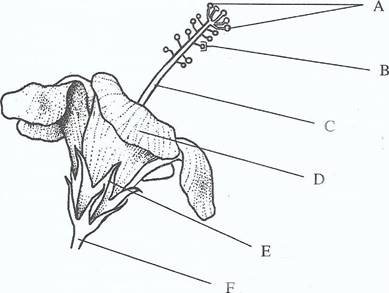
briefly elaborate the impact of ringing on the stem of hibiscus
plant.
11.
Consider that you are a medical doctor and you have received a patient
whose investigation has diagnosed kidney stones. Suggest to the patient
three possible causes and three control measures for kidney stones.
12.Reptiles are organisms whose body temperature is affected by
environmental temperature. Briefly explain three ways that help reptile to
survive in different weather conditions.
Answer two (2) questions from this section. Question 13 is a
compulsory.
13.You are invited by a Fema Club of a certain secondary school as a health
officer. Explain how you will educate members of Fema Club on the cause,
symptoms and transmission of HIV/AIDS. Give five symptoms and four ways of
transmitting the disease. (15 marks)
14. Majority of people
believe that all fungi are harmful organisms. As a biologist, explain four
ways in which fungi are beneficial to human being. (10 marks)
THE UNITED REPUBLIC OF TANZANIA NATIONAL EXAMINATIONS COUNCIL
OF TANZANIA CERTIFICATE OF SECONDARY EDUCATION
EXAMINATION
033/1 BIOLOGY 1 (For
Both School and Private Candidates)
Time: 3 Hours Wednesday, 07th November 2018 a.m.
Instructions
This paper consists of sections A, B and C with a total of
thirteen (13) questions.
Answer all questions in sections A and
B and one (1) question from section
C.
Except for diagrams that must be drawn in pencil, all writing
should be in blue or black ink.
Calculators, cellular phones and any unauthorized materials
are not allowed in the examination
room.
Write your Examination Number on every
page of your answer booklet(s).
SECTION A (20 Marks)
Answer all questions in this
section.
For each of the items (i) - (x), choose the correct answer from
among the given alternatives and write its letter beside the
item number in the answer booklet.
(i) Mitosis normally takes place in
reproductive cells
animal cells only
blood plasma
plant cells only
somatic cells.
(ii) Which of the following is the symptom of the disease caused
by lack of protein in children?
Anemia
Swollen head
Breeding
Pale and thin hair
Sneezing.
(iii) flow many gametes are produced from one cell during
meiosis?
Eight
Two
Four
Six
Ten.
(iv) Which of the following is the excretory organ in
human?
Mouth
Kidney
Pancreas
Stomach
Anus.
(v) Which of the following hormones stimulates seed germination
in plants?
Gibberellins
Auxin
Cytokinins
Abscisic acid
Ethene.
(vi) A joint which allows rotation in all planes is called
suture
ball and socket
pivot
ligament
hinge.
(vii) In which environmental condition the loss of water vapour
from plants is mostly favourable?
Hot and Windy day
A saturated atmosphere
Cool and dry atmosphere
Windy day
Hot day.
(viii) The function of the bright coloured petals
in flowers is
to store nectarines
to hold sepals in position
to produce colour of the flower
to receive pollen grain
to attract insects for pollination.
(ix) The function of hydrochloric acid in food testing experiment
is
to decolourise food sample
to test reducing sugar
to oxidize the food sample
to neutralize sugary foods
to hydrolyze complex to simple sugar.
(x) The interaction between two species in which both organisms
benefit is known as
ectoparasite
parasitism
commensalisms
mutualism
endoparasite.
2. Match the phrases in List A with the
responses in List B by writing the letter
of the correct response from List B beside
the item number of List A in your answer
booklet.
LIST A
LIST B
Larvae released in water by snails before infecting
human and cause the disease.
A pandemic disease caused by virus and has no cure to
the moment.
An endemic disease characterized by periodic fever,
vomiting and joint pain and sometimes death.
A disease caused by deficiency of carbohydrates in
humans.
A deficiency disease caused by lack of vitamin
C.
An epidemic disease diagnosed by the extreme fluid
loss and diarrhea looking like rice water.
An air bone disease diagnosed by prolonged coughing
and sputum contain blood.
Malnutrition disorder identified by swellings of
stomach, thin limbs, thin and pale hairs in
children.
A disorder characterized by failure of blood
clotting.
A sexually transmitted disease which shows painless
sore in various parts of the body.
Cholera
Typhoid
AIDS
Malaria
Syphilis
Kwashiorkor
Scurvy
Common cold
Pneumonia
Hemophilia
Sickle cell anemia
Tuberculosis
Schistosoma
Marasmus
Measles
SECTION B (60 Marks) Answer
all questions in this section. All
questions carry 8 marks except question
three (3) and seven (7) which carry
6 marks each.
3. (a) Differentiate the term "Biological apparatus" from
"Biology Laboratory".
(b) Briefly explain why the following substances are
dangerous?
Toxic substances
Highly flammable
Corrosive substances
Radioactive substances.
4. (a) Give the meaning the following terms as used iri
Biology:
Blood transfusion.
Blood compatibility.
(b) (i) State two advantages of blood transfusion.
(ii) Outline four precautions to be taken during blood
transfusion.
5. (a) Explain the distinctive features of the Division
Filicinophyta.
(b) Draw a well labeled diagram of a fern plant.
6. (a) Describe the stages of human post-natal growth and
development.
(b) What do you understand by a term "primary growth" in
plants?
7. (a) Briefly explain the process of menstruation in human
being.
(b) Mention two types of the common disorders of human
reproductive system.
8. (a) List any four macro-elements in plant nutrition.
(b) Explain the causes of any three common disorders and diseases
of the human digestive system.
9. (a) A newly married couple expects a baby. Using a genetic
cross, work out the probability of their first born child being a
boy.
(b) Give the meaning of the following terminologies as used in
genetics:
(i) Sex linked genes
(ii) Sex determination
(iii) Phenotype.
10. (a) Give the meaning of the following Biological terms as
used in the ecosystem:
Biotic components
Abiotic components
Food chain
Food web.
(b) Construct a feeding relationship which accommodates the
following organisms:
Grasses, Goat, Sheep, Shrubs and Man.
SECTION C (20 Marks)
Answer one (1) question from this
section.
Elaborate four causes and five preventive measures of drug
abuse.
With the aid of a well labelled diagram, describe the urinary
system and explain the process of urine formation in human
beings.
THE UNITED REPUBLIC OF TANZANIA NATIONAL EXAMINATIONS COUNCIL
CERTIFICATE OF SECONDARY EDUCATION EXAMINATION
033/1 BIOLOGY
1
(For Both School and Private Candidates)
Time: 3 Hours
Wednesday, 01stNovember 2017 a.m.
Instructions
This paper consists of sections A, B and C with a total of
thirteen (13) questions.
Answer all questions in sections A and B and
one (1) question from section C.
Except for diagrams that must be drawn in pencil, all writing
should be in blue or black ink.
Calculators, cellular phones and any unauthorised materials are
not allowed in the examination room.
Write your Examination Number on every page of
your answer booklet(s).
SECTION A (20 Marks)
Answer all questions in this section.
1.For each of the items (i) - (x), choose the correct answer among
the given alternatives and write its letter beside the item number
in the answer booklet provided.
(i)Goitre is a deficiency disease caused by lack of which element in
the diet?
Carbohydrate
Iodine
Vitamin E
Vitamin C
Protein.
(ii) Tongue rollers in genetics is an example of
gametogenesis
continuous variation
swallowing
lubricating food
discontinuous variation.
(iii)Which food substance is investigated in the biuret test
procedur?
Carbohydrate
Lipids
Protein
Starch
Reducing sugar.
(iv) The product of anaerobic respiration process in animals
is
lactic acid
carbondioxide
alcohol
water
oxygen.
(v)A phylum consisting of species with jointed appendages and
exoskeleton is known as
Chordata
Anelida
Arthropoda
Platyhelminthesis
Nematoda.
(vi)Which part of the flower receives pollen grain during
pollination?
Petal
Stigma
Stamen
Style
Ovary.
(vii)A rapid growth in plants is mainly taking place in
leaves
cambium
roots
shoots and root tips
stem.
(viii)Which of the following is NOT a component of First Aid Kit?
Razor blade
Panadol
Bandage
Soap
Microscope.
(ix) Which disease spread rapidly as a result of poor waste
disposal?
Anemia
AIDS
Cholera
Leukemia
Small pox.
(x) A voluntary muscle that is capable of relaxing continuously
and do not fatigue easily is known as
skeletal muscle
biceps
triceps
cardiac muscle
smooth muscle.
2.
Match the phrases in List A with the responses
in ListB by writing the letter
of the correct response from List B beside the
item number of List A in your answer booklet
provided.
LIST A
LIST B
(i) A disease casued by flatworms known as
schistosome.
(ii) A disease caused by a protozoan called
trypanosoma.
(iii)A tropical disease caused by
plasmodiun.
(iv) A water bone disease casued by
entamoeba histolystica.
(v)An outbreak disease caused by
vibrio cholerae.
(vi)A sexually transmitted disease caused by bacteria
known as treponema palladium.
(vii)A communicable disease casued by
salmonella typhii.
(viii) A sexually transmitted disease caused by bacteria
known as Neisseria gonorrhoea.
(ix) A viral infection disease caused by HIV.
(x) A disease caused by
micobacterium tuberculosis.
Malaria
Syphilis
Bilhazia
AIDS
Dysentery
Gonorrhoea
Typhoid
Measles
Tuberculosis
Cholera
Trypanosomiasis
Tetanus
Leprosy
Polimyelitis
Rabies
SECTION B (60 Marks)
Answer all questions in this section.
All questions carry 8 marks except question
eight (8) and nine (9) which carry
6 marks each.
3.(a) Why schools should have a Biology laboratory? Give a
reason.
(b)
State six laboratory rules.
4.
(a) State two principles of waste disposal.
(b)
Suggest three proper ways of waste disposal in the
community.
5. (a) (i) What do you understand by the term respiration?
(ii) Name the two types of respiration.
(b) Explain how gaseous exchange occurs across the aveolus.
6.
(a) Differentiate complete dominance from incomplete
dominance.
(b) In a laboratory experiment, tall pea plants were crossed wiht
dwarf pea plants. F1
plants were then selfed to produce
F2 generation.
(i)Using appropriate symbols, work out a genetic cross for
F1
generation.
(ii) Give the phenotypic and genotypic ratio of F1
generation.
7.(a) Explain the process of fertilization in flowering
plants.
(b)Briefly explain how you would identify an insect pollinated
flower.
8.(a) Name three type of muscles found in mammals.
(b)Briefly explain how muscles are adapted to their role. Give three
points.
9.(a) List any two types of blood cells.
(b)Give two differences between arteries and vein.
10. (a) With examples, state the meaning of “abiotic” and
“biotic” factors of the environment.
(b)(i) Differentiate the terms “food chain” from a “trophic
level”.
(ii) Construct a food chain by using organisms named in the
following list: Grass, Bacteria, Lions and Zebra.
SECTION C (20 Marks)
Answer one (1) question from this section.
11.Describe the types of macronutrients needed in human body. In
each type identify the source and function of food substances in
human body.
12.With the aid of illustrations, discuss the stages of
mitosis.
13.With the aid of a well labelled diagram, describe the structure
of bacteria and give three advantages and disadvantages of
bacteria in daily life.
THE UNITED REPUBLIC OF TANZANIA NATIONAL EXAMINATIONS
COUNCIL
CERTIFICATE OF SECONDARY EDUCATION EXAMINATION
033/1 BIOLOGY 1
(For Both School and Private Candidates)
Time: 3 Hours Thursday, 03 rd November
2016 a.m.
Instructions
This paper consists of sections A, B and C.
Answer all questions in sections A and
B and one (1) question from section
C.
Except for diagrams that must be drawn in pencil, all
writings should be in blue or black ink.
Calculators and cellular phones are
not allowed in the examination
room.
Write your Examination Number on every
page of your answer booklet(s).
SECTION A (20 Marks)
Answer all questions in this section.
For each of the items (i) - (x), choose the correct answer
among the given alternatives and write its letter beside the
item number in the answer booklet provided.
(i)Caridac muscle can be found in which part of the animal
body?
Skull
Heart
Small intestine
Limbs
Head.
(ii)The kidney in animals is mainly responsible for
excretion
digestion
transportation
respiration
absorption.
(iii) The aim of experiment in the scientific investigation is
to
identify the problem
test the hypothesis
confirm the problem
predict the results
collect data.
(iv) The main product of anaerobic respiration process in plants
is
uric acid
lactic acid
alcohol
water
oxygen.
(v) Which of the following parasitic organisms is typicall
ectoparasite?
Tick
Tapeworm
Plasmodium
Round worm
Lichen.
(vi) Which of the following is a seed bearing plant?
Liverwort
Prothallus
Fern
Sisal
Moses.
(vii) A part of an onion bulb which is important for vegetative
propagation is
scale leaves
foliage leaves
terminal buds
roots
stem.
(viii) Which of the following is NOT a component of blood?
Erythrocyte
Platelets
Leucocyte
Plasma
Vein.
(x) Which food substance can be tested by using iodine
solution?
Protein
Starch
Carbohydrate
Non reducing sugar
Reducing sugar.
(x) The offspring produced by mating the F1 generation is konwn
as
F3 generation
F1 products
F2 generation
New generation
Genetic generation.
2. Match the phrases in List A with the
responses in List B by writing the letter of
the correct response from List B beside the
item number of List A in the answer booklet
provided.
LIST A
LIST B
(i) External appearence of a given characteristic as a
result of influence by a gene.
(ii) Genetic disorder characterised by failure of blood
clotting.
(iii) A sudden genetic change which can be
inherited.
(iv)Characteristics that can pass on from parent to
offspring through sexual reproduction.
(v) The possession of the characteristics which are
different from those of the parents and other
offspring.
(vi) A gene that influences characteristics over another
gene when in heterozygous state.
(vii) A cross between individuals with homozygous
parents.
(viii) A unit of inheritance which determins a specific
characteristic.
(ix) Genetic makeup of a given gene which determines a
given characteristic.
(x) A disorder resulting from lack of melanin
pigments
Mutation
Sex linked character
Genotype
Dominant gene
Variation
Albinism
Phenotype
Test cross
Loci
Haemophilia
Homozygous
Backcross
Recessive
Gene
Co-dominance
SECTION B (60 Marks)
Answer all questions in this section.
(a) Give the meaning of the term “laboratory.”
(b) Describe three warning sign found on the laboratory
containers.
(a) State three basic principles of waste disposal.
(b) Why poor waste disposal at home is said to cause adverse
effects?
(a) Briefly explain the following terms:
Trophic level.
Food chain.
Food web.
(b)With example, briefly explain how the following
interactions of living organism take place.
Predation
Parasitism.
(a) Define the terms “classification” and “Taxonomy”.
(b) (i) List the types of classification systems.
(ii) Give two differences between the classification systems
you have listed in (b)(i).
(a) (i) Name three types of muscles found in mammals.
(ii) Which one of the muscle named in (a)(i) is a voluntary
muscle?
(b)Briefly explain the functions of the following component
of the skeleton:
Skull
Ribs
Vertebral column
Pelvic girdle.
(a) (i) What are the raw materials for photosynthesis?
(ii) List two products of photosynthesis.
(b) State how the ileum is adapted for absorption
function.
(a) Explain how anaerobic respiration is applied in a real
life situation.
(b)List the organs responsible for gaseous exchange in the
following organisms:
Goat
Grasshopper
Frog
Tilapia.
(a) Give the meaning of the following terms:
Vegetative propagation.
Gamete.
(b) Explain the merits and demerits of asexual reproduction
in plants.
SECTION C (20 Marks)
Answer one (1) question from this section.
With the aid of a well labelled diagram, describe the
internal part of the mammalian heart.
Explain how mammals regulate their internal body temperature
in response to external environmental changes.
Write a descriptive report which you can use to educate the
community about the mode of transmission, symptoms and
prevention measure of malaria in Tanzania.
THE UNITED REPUBLIC OF TANZANIA NATIONAL EXAMINATIONS
COUNCIL
CERTIFICATE OF SECONDARY EDUCATION EXAMINATION
033/1 BIOLOGY1
(For Both School and Private Candidates) TIME: 3 HOURS Wednesday,
04 th November 2015 a.m.
INSTRUCTIONS
This paper consists of three sections A, B and C.
Answer all questions from sections A
and B and one (1) question from section
C.
Except for diagrams that must be drawn in pencil, all writing
should be done using a blue or black pen.
Calculators and cellular phones are
not allowed in the examination
room.
Write your Examination Number on every
page of your answer booklet(s).
SECTION A (20 MARKS)
Answer all questions in this section.
1. For each of the items (i) – (x), choose the correct answer
from among the given alternatives and write its letter beside the
item number in the answer booklet provided.
(i) Bowmans capsule is found in which of the following
organs?
Liver
Pancreas
Kidney
Spleen
Heart
(ii) Which of the following processes is involved in the
regulation of body temperature in human beings?
Urination
Painting
Deamination
Sweating
Detoxification
(iii) A structure that allows air to enter the trachea and
prevents food from entering the wind pipe is known as
glottis
tongue
soft plate
mouth
epiglottis
(iv) Study the following sequence of organisms: Grass → Rabbit →
Wolves → Fleas
The sequence is an example of
food web
ecosystem
a pyramid
food chain
abiotic
(v) Lipase enzymes are mainly contained in which digestive
secretions?
Hydrochloric acid
Gastric juice
Saliva
Intestinal juice
Pancreatic juice
(vi) A person who is admitted in the hospital after an operation
will most likely be fed on food rich in:
vitamin C
vitamin A
protein
lipids
water
(vi) Which of the following is a vector of sleeping
sickness?
House fly
Mosquito
Tsetse-fly
Tick
Cockroach
(vii) The outer most living structure that identifies a plant
cell is the presence of
cytoplasm
vacuole
cell wall
nuclear membrane
cell membrane
(x) One of the most distinctive features used to place organisms
in the Kingdom Fungi is the presence of
gill structures
hyphae
cellulose
cap
exoskeleton
(x) Which of the following represent the organisms with
homologous structures?
Wings of Birds and Butterfly
Forelimbs of Bird and Bat
Tail of Rat and Scorpion
Sting of Honey bee and Mosquito
Beak of Duck and Hen
2. Match the phrases in ListA with the responses
in List B by writing the letter of the
correct response from List B beside the item
number of List A in your answer
booklet.
LIST A
LIST B
A stage of growth in humans, characterised by rapid
growth and a lot of physical and mental changes.
A type of seed germination whereby cotyledons are
pushed above the ground.
The ability of seeds to germinate
The region of most active growth in plants.
A type of seed germination whereby cotyledons remain
beneath in the ground.
A pore which allows water into a seed during
germination.
Inability of a seed to germinate.
Prevents a viable seed from germinating.
A stage of family formation and parenthood in growth
and development.
A type of cell division whereby the number of
chromosomes is maintained from parent cell to daughter
cell.
Meiosis
Metamorphisis
Radicle
Plumule
Hypogeal germination
Adulthood
Dormancy
Epigeal germination
Adolescent
Cotyledon
Mitosis
Micropyle
Hard seed coat
Stem and root apices
Viability
SECTION B (60 Marks)
Answer all questions in this section.
Each question carries 8 marks except question three and eight
which carry 6 marks each.
(a) What do you understand by the following terms:
Biology
Zoology
(b) Why is it important to study Biology? Give four
reasons.
(a) What do you understand by the term “First Aid”?
(b) State how you would render First Aid to a person who has been
shocked by electric current.
(a) Define the terms “digestion” and “feeding” as used in
Biology.
(b) Explain why during digestion the food is:
Alkaline when in the mouth.
Acidic when in the stomach.
Alkaline when in the ileum.
(a) List any three characteristics of the Phylum
Arthropoda.
(b) (i) Mention the Classes of the Phylum Arthropoda
(ii) Name one representative member for each Class you have
mentioned in 6(b)(i).
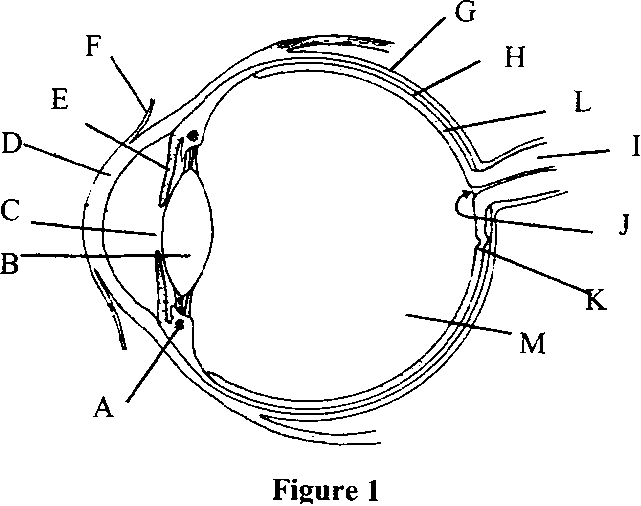
The diagram in Figure 1 represents an eye of a human being.
Study the diagram and answer the questions that follow:
(a)Name the labeled parts A – L.
(b) What will happen in part C if someone suddenly
faces:
the dim light.
bright light.
(a) Define the term “gene” and “genetics”.
(b) Give two differences between Deoxyribonucleic Acid (DNA)
and Ribonucleic Acid (RNA).
(a) Give the long meaning of the following abbreviation
terms:
HIV
STIs
Tds
(b) Briefly explain any two ways through which HIV is transmitted
from one person to another.
(a) Define the term “osmoregulation”.
(b) Briefly explain the mechanisms of regulating sugar level in
the blood.
SECTION C (20 Marks)
Answer one (1) question from this section.
Explain how parts of the mammalian heart are adapted to their
function.
Describe the symptoms of a person who is infected by Vibrio
cholera and suggest six prevention measures and treatment for
a cholera outbreak.
Explain the functions of the major components of the human
skeleton and their adaptations.
We have detected that you are using adblocking plugin in your browser. The revenue we earn by the advertisements is used to manage this website, we request you to whitelist our website in your adblocking plugin. If you believe this is an error, try reloading the page.


 Lion. A lion is: